
5 Common Stingers | Which Stinger? | What Are Wasps and Bees? | Lives of Wasps and
Bees | Avoiding Stings
Which Hurts Most? | Allergy to Stings | First Aid | Control
| Links | Site Map
Text Copyright © 2009 Innogenesis Inc., All Rights Reserved










Ads by Google

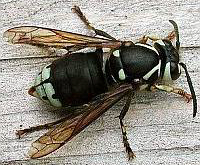
* body smooth
* body black and white
* legs black and white
* face white and black
* abdomen blunt both at front and rear ends
* wings longer than body
The Bald-faced Hornet is a large wasp that builds large paper nests above ground.
Behavior:
These wasps are carnivores feeding primarily on insects. They also collect nectar and sugary liquids to feed their young. They are not noted for bothering humans out-of-doors, but they are fierce stingers in defense of their nest.
Life Cycle:
The queen is the only member of the colony to overwinter. She emerges from hibernation in Spring and begins to hunt for food and build a nest. As she rears more and more workers, eventually they take on the task of foraging for food, expanding the nest and rearing the young. All workers die with the first early frosts and only the queen seeks a place to hibernate for the winter.
Nest Type:
The large, football-shaped paper nests are usually suspended in trees well above the ground, but may also be found in bushes and occasionally attached to buildings. The entrance hole is at the bottom and inside there will be two to four horizontal combs composed of paper cells where the young are raised.
Control:
Nest removal is the only effective means of decreasing the numbers of this species. During summer, the nests should only be removed by a qualified professional using appropriate protective equipment. In winter the nests are deserted and can be easily disposed of.
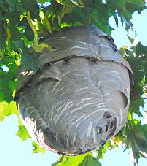
Nest of Bald-faced Hornet.