
5 Common Stingers | Which Stinger? | What Are Wasps and Bees? | Lives of Wasps and
Bees | Avoiding Stings
Which Hurts Most? | Allergy to Stings | First Aid | Control
| Links | Site Map
Text Copyright © 2009 Innogenesis Inc., All Rights Reserved










Ads by Google

* body fuzzy
* body black and brown
* legs black
* body broad, chunky
* face black
* abdomen tapering at rear end
* wings shorter than body
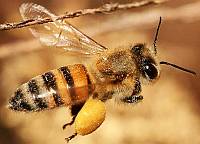
The Honey Bee is a social bee that builds complex nests with wax comb in hollow trees, hives or other enclosed spaces.
Behavior:
Honey Bees feed exclusively on nectar and pollen which they gather from flowers. They visit our gardens but do not bother humans. People are rarely stung by Honey Bees that are out foraging away from their hive. Bees may occasionally visit swimming pools to get water and stings may occur there.
Life Cycle:
Honey Bee hives contain stored honey providing an energy resource that allows large numbers of workers to overwinter in the hive, together with the queen. New colonies are formed by splitting the population of an existing hive in a process called swarming.
Individual worker bees are reared in the hive by other workers and take about three weeks to develop from egg through to adult. In the middle of summer, an adult worker may live only 4 weeks, but those workers emerging in Fall will likely overwinter and live up to 7 months.
Nest Type:
Honey bees build vertical combs consisting of hexagonal wax cells that are used for rearing the young and for storing pollen and honey. The combs are always located in a dry, protected cavity like a hive box, a hollow tree, or occasionally in spaces in buildings.
Control:
Honey Bees are highly beneficial insects because of their pollination activities and should not be destroyed unless absolutely necessary. If a nest must be removed from a building, the services of a professional beekeeper or exterminator should be used. Honey Bee colonies build up large population sizes and many will rally to sting anyone disturbing their hive.
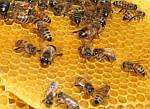
Honey Bees on wax comb.